Buying one of the best luxury properties is not just about finding a larger house, a nicer view, or a more expensive postcode.
It is about buying a lifestyle that still makes sense five or ten years after the keys land in your hand.
I learned this during a luxury villa viewing in the Gulf a few years ago. On paper, the property looked perfect: huge plot, infinity pool, marble everywhere, private gate, and a price tag that made it feel exclusive. But once we walked through it properly, the weak spots started showing. The driveway was too narrow for guests, the outdoor area had almost no shade, the kitchen felt disconnected from the entertaining spaces, and the villa faced a construction plot that would probably ruin the sunset view later.
Bro, that experience taught me something important: luxury is not the listing price. Luxury is how the property performs in real life.
The best luxury properties combine location, architecture, privacy, quality finishes, lifestyle convenience, and long-term investment potential. Whether you are buying in Dubai, Abu Dhabi, Doha, Muscat, or looking at iconic European-style estates such as a luxury villa inspired by Luxury Villa Excelsior Parco, the same rule applies: do not buy the dream until you inspect the details behind it.
This article breaks down how to identify truly premium real estate, avoid expensive mistakes, and choose a luxury home that feels impressive today without becoming a headache tomorrow.
What Makes a Property Truly Luxury?
A luxury home is not simply a house with expensive furniture and a swimming pool.
Real luxury comes from a combination of scarcity, design, privacy, convenience, craftsmanship, and location. A villa can have ten bedrooms and still feel cheap if the layout is poor, the materials are weak, or the neighborhood has no long-term appeal.
The best luxury properties usually deliver a feeling that is difficult to copy. You walk in and immediately understand why that home costs more than the one down the road.
That may come from a private beachfront, a full skyline view, a golf-course position, a quiet gated community, a historic architectural style, or a modern smart-home design that makes everyday life easier.
In the Gulf region, luxury also has a practical side. Buyers often care about covered outdoor spaces, large family rooms, guest majlis areas, staff accommodation, private parking, shaded gardens, high-quality cooling systems, and flexible spaces for entertaining.
A villa in Dubai may need a strong indoor-outdoor setup to handle the climate. A high-end home in Doha may need privacy planning around family areas. A luxury property in Muscat may need to balance ocean views with practical access to schools, retail, and business districts.
The Real Luxury Checklist
When experienced buyers inspect premium homes, they usually look beyond the brochure.
They want to know:
- Is the location genuinely rare?
- Does the property have privacy from neighbors and future developments?
- Are the finishes premium, or only visually impressive?
- Is the layout practical for daily life?
- Does the home have strong resale appeal?
- Are there hidden service charges, maintenance costs, or community restrictions?
- Can the property still compete with newer luxury developments in five years?
A luxury property should feel easy to live in. If it creates stress, constant repairs, awkward movement, or poor privacy, then it is not truly luxurious no matter how expensive it looks.
Why Buyers Are Searching for the Best Luxury Properties Now
Luxury real estate buyers today are more informed than ever.
They compare villas across countries, review floor plans online, inspect transaction data, and expect a better lifestyle return from their money. They are not just buying walls and land. They are buying security, status, family comfort, rental potential, residency options, and future flexibility.
In markets such as Dubai, foreign buyers can purchase property in designated freehold areas, which has helped make the city one of the most internationally accessible luxury real estate markets in the region. (U.ae)
Qatar has also established designated ownership and usufruct areas for non-Qatari buyers, while Oman channels most foreign ownership opportunities through approved Integrated Tourism Complexes. ()
That matters because luxury buyers are often global buyers. They may live in London, Jakarta, Singapore, Riyadh, Mumbai, or Istanbul, but they want an asset in the Gulf that can work as a residence, holiday home, investment, or family base.
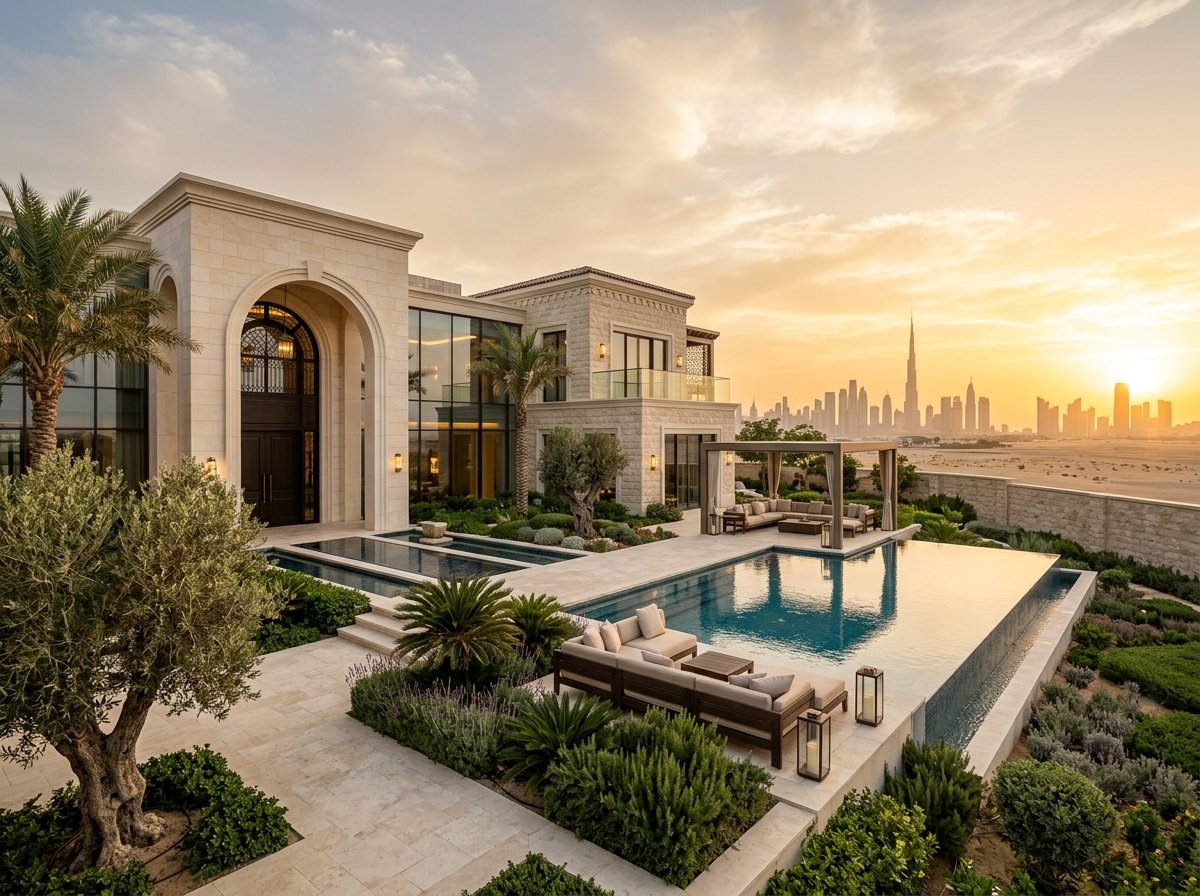
The best luxury properties tend to attract demand because they offer something limited. Anyone can build another apartment tower. It is much harder to create another beachfront villa with direct sea access, another private estate on a golf course, or another mansion with uninterrupted Burj Khalifa, marina, mountain, or waterfront views.
The Best Luxury Property Types for Buyers and Investors
Different buyers want different things. Some want a family home. Others want a prestige asset. Others want rental income with a luxury lifestyle attached.
Here are the property categories that usually stand out.
1. Waterfront Villas
Waterfront villas remain among the most desirable luxury assets because water views are difficult to replace.
In Dubai, that may mean a Palm Jumeirah villa, Dubai Marina penthouse, canal-side home, or waterfront villa in a master-planned community. In Doha, it may mean a property near The Pearl or West Bay. In Muscat, it may mean an ocean-facing villa in an integrated resort-style development.
The attraction is obvious. Water creates emotional value. Buyers love the view, the feeling of openness, the prestige, and the holiday-home atmosphere.
But you need to inspect waterfront property carefully. Salt air can accelerate wear on metal, glass, outdoor furniture, pool systems, and mechanical equipment. Maintenance may cost more than you expect.
A waterfront villa is amazing when the developer has planned drainage, landscaping, access roads, and infrastructure properly. It becomes a nightmare when the sea view comes with humidity problems, corrosion, difficult parking, or unreliable maintenance.
2. Golf Course Villas
Golf communities usually attract buyers who want a quieter luxury lifestyle.
These homes often offer greenery, lower density, wider plots, private club access, restaurants, sports facilities, walking routes, and security. They can be especially attractive for families, executives, retirees, and long-term residents.
The best golf villas have a clean view across the course without feeling exposed to players, maintenance vehicles, or clubhouse traffic.
When you inspect a golf course property, visit in the morning and evening. A view that feels peaceful at 11 a.m. may feel very different during busy club hours or weekend events.
3. Branded Residences
Branded residences have become a major luxury real estate category.
These properties connect the home to a hospitality, fashion, automotive, or lifestyle brand. Buyers may get concierge service, hotel-style amenities, private lounges, fitness facilities, housekeeping options, valet parking, and premium design standards.
The brand can help with resale perception, especially in international markets. But do not buy only because the logo looks good on the brochure.
Check the service fees. Check what the brand actually manages. Check whether the developer has delivered similar projects before. Check whether the apartment or villa works as a home, not just as a marketing concept.
A luxury buyer should never pay a massive premium for branding alone unless the building, location, and services genuinely support it.
4. Private Gated Villas
Private villas inside gated communities are still one of the strongest choices for families.
These homes give buyers security, private roads, shared parks, children’s play areas, community retail, fitness facilities, and a more controlled environment.
In the UAE and Qatar, family buyers often value privacy and space as much as a flashy city view. A villa with a proper garden, maid’s room, driver’s room, covered parking, formal living room, family lounge, and large kitchen can have stronger practical demand than a smaller but more visually dramatic property.
The best luxury properties often win because they solve real family needs without making compromises.
5. Penthouse Apartments
Luxury penthouses work well for buyers who want convenience, skyline views, central locations, and lock-up-and-leave living.
A great penthouse can offer private lifts, oversized terraces, rooftop pools, double-height living areas, premium finishes, and strong rental appeal.
But penthouses are not automatically good investments. Some buildings have too many similar units. Others have weak management, high service charges, noisy surroundings, or views that can disappear when another tower launches nearby.
Always study future development around the building. A skyline view is only valuable when it stays open.
How to Identify the Best Luxury Properties Before You Buy
Finding premium real estate is easy.
Finding the right premium real estate is where the real work starts.
Start With Location, Not Interior Design
Luxury interiors can be changed. Location cannot.
You can renovate a kitchen, replace flooring, upgrade lighting, and redesign landscaping. You cannot move a house away from a traffic bottleneck, noisy road, weak neighborhood, flood-risk zone, or future construction site.
Before you fall in love with a property, study the wider area.
Ask yourself:
- How long does it take to reach business districts, schools, hospitals, airports, and retail?
- Is the road access smooth during peak hours?
- Are there empty plots nearby that may become towers, roads, or construction zones?
- Does the neighborhood attract wealthy owner-occupiers or mostly short-term renters?
- Is the community improving, stable, or losing attention to newer developments?
- Are there future transport or infrastructure projects that may improve access?
- Does the area feel premium at night, not only during daytime viewings?
A luxury villa in a weak location can lose its appeal quickly. A well-positioned home in a strong neighborhood can remain desirable even when the market slows.
Inspect the Layout Like You Will Actually Live There
A common mistake is getting distracted by a huge chandelier, marble staircase, or fancy swimming pool.
Look at the flow.
Can you bring groceries from the parking area to the kitchen easily? Does the family living room connect naturally to the garden? Is the guest area separate enough from private bedrooms? Is there enough storage? Are the bedrooms well positioned? Does the master suite actually feel private?
For villas, check whether the outdoor area works across different times of day. In Gulf markets, shade matters. A beautiful terrace that becomes unusable in the afternoon is wasted space.
For apartments, check lift access, private corridors, balcony wind exposure, parking allocation, and noise from nearby roads or construction.
Luxury buyers expect convenience. A poor layout can quietly destroy the experience of an otherwise beautiful home.
Check Build Quality Behind the Showroom Look
High-end listings are designed to impress.
Your job is to look behind the styling.
Check the doors, cabinetry, bathroom fittings, air-conditioning vents, ceiling finishes, tile alignment, window seals, drainage, water pressure, and outdoor stonework. Open cabinets. Turn on taps. Test lights. Walk around the property slowly.
Pay attention to signs of rushed construction:
- Cracks around walls or ceilings
- Water staining
- Uneven flooring
- Weak doors or loose handles
- Poor silicone sealing in bathrooms
- Low-quality wardrobe interiors
- Inconsistent marble or tile installation
- Weak drainage around gardens and pools
- Excessive heat near windows
A professional snagging inspection is worth the money, especially for a newly completed luxury villa or off-plan handover.
Best Luxury Properties in Dubai, Doha, and Muscat
Each market has a different personality.
Dubai: Fast-Paced Luxury With Global Appeal
Dubai is ideal for buyers who want high liquidity, international demand, modern architecture, strong lifestyle infrastructure, and a wide range of luxury options.
You can find penthouses, branded residences, golf villas, beachfront estates, and high-end off-plan properties across the city.
The major advantage is choice. The challenge is avoiding oversupply in areas where every new project looks similar.
Dubai buyers should focus on developer reputation, community maturity, service charges, ownership structure, future supply, and transport access. Foreign ownership is permitted in designated freehold areas, so buyers should always confirm the title type and property registration process before committing. (U.ae)
Doha: Private, Premium, and Family-Oriented
Doha luxury real estate often appeals to buyers who prefer privacy, waterfront lifestyle, large family spaces, and a more controlled market environment.
The Pearl, West Bay, Lusail, and selected premium districts remain key areas to watch for high-end apartments, villas, and branded projects.
Non-Qatari buyers can purchase or obtain usufruct rights in designated locations, but the approved areas and regulations can change, so buyers should verify the latest rules directly with the relevant authorities and a qualified local lawyer before paying a deposit. (Wisata Qatar)
A Doha luxury property should feel private, functional, and built for long-term comfort. Many buyers prefer larger layouts, quality finishing, access to retail and schools, and practical road connections over a purely flashy design.
Muscat: Quiet Luxury and Resort-Style Living
Muscat is for buyers who want a slower luxury experience.
The city offers mountains, coastline, resort-style communities, golf developments, and a more relaxed pace compared with Dubai or Doha. Luxury properties often feel more spacious and less urban.
Foreign ownership in Oman remains regulated, with Integrated Tourism Complexes playing a central role for non-Omani ownership opportunities. (Kementerian Warisan dan Pariwisata)
For buyers, the key question is not only “Is the villa beautiful?” It is “Does the development have strong maintenance, real demand, practical access, and a clear ownership framework?”
Projects with established amenities, professional management, and strong lifestyle positioning often carry more confidence than isolated luxury homes without a proven community around them.
How Much Should You Budget Beyond the Purchase Price?
Luxury buyers often focus too heavily on the headline price.
The purchase price is only the starting point.
You also need to budget for registration fees, agent fees, legal checks, mortgage costs, furnishing, landscaping, pool maintenance, insurance, service charges, utility deposits, smart-home upgrades, and annual upkeep.
For a luxury villa, annual maintenance can be substantial. Pools, gardens, cooling systems, water features, exterior lighting, security systems, and staff accommodation all need attention.
A rough buyer mindset should be this: if you cannot comfortably carry the annual ownership cost, you may be stretching too far on the purchase price.
Costs You Should Ask About Before Signing
- Property transfer and registration fees
- Agency commission
- Mortgage valuation and processing fees
- Community service charges
- Annual maintenance contracts
- Pool and landscaping costs
- Home insurance
- Utility connection fees
- Furniture and interior upgrades
- Developer payment-plan charges
- Early settlement penalties for financing
- Property management fees for rental homes
- Vacancy periods and leasing costs
The best luxury property is one you can enjoy without feeling financially trapped by its running costs.
Buying Off-Plan vs Ready Luxury Property
Both options can work. The better choice depends on your goals.
Off-plan luxury property can offer flexible payment plans, newer design, lower initial entry prices, and potential upside if the project delivers well. But it also brings construction risk, handover delays, layout changes, and uncertainty around the final community atmosphere.
Ready luxury homes let you inspect the actual view, actual space, actual finishing, and actual neighborhood. You know what you are buying. That reduces surprises.
For buyers who want immediate family use, ready property often feels safer.
For investors with time and strong market knowledge, off-plan can work well when the developer, location, and payment structure are all right.
Do not buy off-plan just because the showroom is beautiful. Check escrow arrangements, developer history, project timeline, contractual clauses, unit specifications, parking, service charges, and handover obligations.
The Smart Buyer’s Step-by-Step Luxury Property Process
Here is a simple process that keeps emotions under control.
- Set a total budget, not just a purchase budget. Include fees, furnishing, upgrades, and annual ownership costs.
- Decide your main purpose. Are you buying for family living, rental income, capital appreciation, residency, holiday use, or prestige?
- Select three to five target neighborhoods. Do not inspect random properties across an entire city without a strategy.
- Compare at least ten properties. You need enough context to understand what “good value” looks like.
- Visit properties at different times of day. Morning traffic, sunset heat, weekend noise, and night-time atmosphere all matter.
- Check the developer or seller history. Ask for documentation, service charge details, ownership records, and building management information.
- Conduct legal due diligence. Use a qualified local property lawyer where appropriate, especially for cross-border purchases and foreign ownership structures.
- Get a professional inspection. Do not assume a luxury finish means flawless construction.
- Negotiate based on evidence. Use comparable listings, condition issues, payment terms, and market timing.
- Plan your exit strategy before buying. Know who is likely to buy or rent the property after you.
Final Thoughts
The best luxury properties are not always the biggest, newest, or most expensive homes on the market.
They are the homes that combine rare location, real privacy, practical design, strong build quality, lifestyle convenience, and long-term demand.
A beautiful villa can impress your guests for one evening. A well-chosen luxury property can improve your daily life, protect your capital, and remain desirable long after the initial excitement fades.
So take your time. View more than one property. Ask uncomfortable questions. Check the paperwork. Study the neighborhood. And remember: real luxury is not just about owning something expensive. It is about owning something exceptional.
Ready to explore an iconic European-inspired estate concept? Read our next article on Luxury Villa Excelsior Parco and discover what makes this type of prestigious villa style so attractive to high-end buyers.