Buying a high end property is not just about choosing the home with the biggest pool, the best skyline view, or the flashiest lobby. It is about buying a lifestyle, protecting capital, and making sure the property still feels like a smart move five or ten years from now.
I learned this the hard way when I helped a buyer compare two luxury waterfront apartments that looked almost identical on paper. Both had premium finishes, private beach access, concierge service, and a serious “wow” factor during the viewing. But one sat inside a better-managed community, had stronger resale demand, and offered much better privacy. That buyer chose the less obvious option, and honestly, it was the right call.
That is the thing with luxury real estate. The details matter more than ever.
A high end property can be an incredible personal home, a strong rental asset, a family legacy, or a smart international diversification move. But it can also become expensive dead weight if you buy based on emotion alone. You need to understand the neighborhood, ownership rules, developer reputation, service charges, future supply, and who will want to buy or rent it after you.
This article breaks down how serious buyers evaluate high end property opportunities, especially across premium Middle Eastern markets such as Dubai, Abu Dhabi, Muscat, and Doha.
What Is Considered a High End Property?
A high end property is a home positioned at the upper end of its local market because of its location, design, privacy, services, finishes, land size, views, or exclusivity.
It does not always need to be a massive mansion.
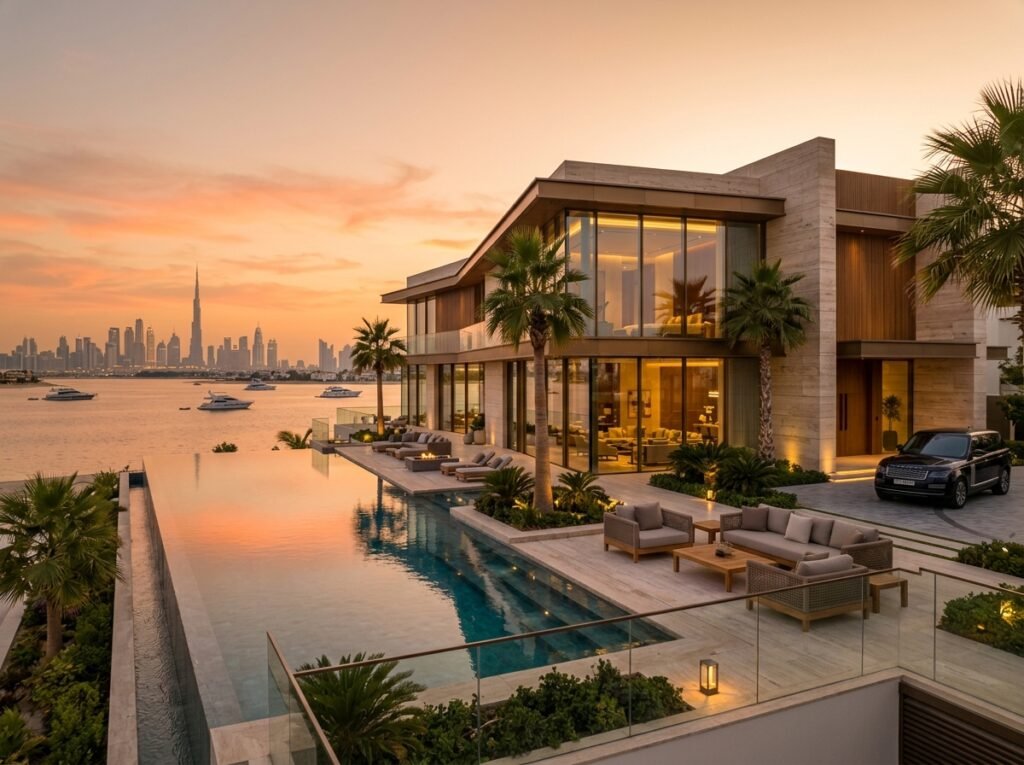
In Dubai, a high end property might be a waterfront penthouse in Palm Jumeirah, a branded residence in Downtown Dubai, or a large villa in Emirates Hills. In Abu Dhabi, it could be a beachfront villa on Saadiyat Island or a modern residence on Yas Island. In Qatar, it may be a luxury apartment at The Pearl-Qatar or a villa inside a prestigious private compound. In Oman, many buyers look at resort-style homes in Integrated Tourism Complexes such as Al Mouj Muscat or Muscat Bay.
The common theme is simple: premium buyers pay for something difficult to replicate.
That “something” may be direct beach access, uninterrupted sea views, a golf-course frontage, a private marina berth, a rare heritage location, or a building operated by an internationally recognized hospitality brand.
A real high end property should offer more than marble floors and a fancy brochure. It should have a strong reason for being expensive.
Why Buyers Are Still Investing in High End Property
Luxury buyers are not all chasing the same result. Some want a home base in the Gulf. Others want an asset that produces rental income. Some want residency flexibility. Others simply want a better lifestyle for their families.
The best luxury purchases usually serve more than one purpose.
For example, a villa in a well-established freehold community can offer personal use, long-term value retention, rental demand, and a more liquid resale market than a remote luxury development with limited infrastructure.
Dubai remains one of the most active luxury property markets in the region. Dubai Land Department reported AED 252 billion in real estate transactions during the first quarter of 2026, with transaction value up 31% year over year. That does not mean every luxury home is automatically a good buy, but it shows why serious investors keep Dubai on their radar. (dubailand.gov.ae)
The key is to buy quality, not just luxury marketing.
The Real Difference Between Luxury and “Fake Luxury”
Bro, this is where many buyers get trapped.
A developer can add chandeliers, a glossy sales gallery, a branded coffee machine, and a rooftop lounge. None of that automatically makes the property high end.
True luxury is harder to fake.
A genuinely premium property tends to have several of these advantages:
- A location with limited future supply
- Strong architecture and a recognizable design identity
- High-quality construction and durable materials
- Large, efficient layouts with usable living space
- Privacy between units or villas
- Strong management and maintenance standards
- Premium amenities that residents actually use
- Easy access to business hubs, schools, airports, beaches, or marinas
- A buyer profile that supports resale demand
- A trusted developer or operator with a proven delivery record
The difference is obvious after you visit enough properties. One building feels like a showroom. Another feels like a place wealthy people would genuinely live in for years.
That is the one you want.
The Best Types of High End Property to Buy
Waterfront Villas
Waterfront villas are usually among the strongest luxury assets because land near the water is naturally limited.
Buyers love sea views, private beach access, marina proximity, and the lifestyle that comes with waking up near the water. In markets like Dubai, Abu Dhabi, Doha, and Muscat, waterfront homes can command stronger rental demand and better long-term appeal than inland alternatives.
Still, not all waterfront properties are equal. Ask whether the water view is permanently protected, whether future construction may block it, and whether the home sits in a flood-prone or exposed coastal area.
You should also inspect saltwater impact on exterior materials, air-conditioning systems, windows, metal fixtures, and landscaping.
Branded Residences
Branded residences combine luxury real estate with hotel-style services or a globally known hospitality name.
They can work well for buyers who want a lock-and-leave lifestyle, concierge support, housekeeping options, valet service, spa access, and a strong rental appeal for short-stay guests.
However, branded does not always mean better investment.
Check the service charge carefully. Some branded residences carry premium annual fees that can reduce net rental returns. You should also understand whether the brand actively manages the building or only licenses its name.
A true luxury operator with strong service standards can support value. A branding deal with weak operations may not.
Golf Community Villas
Golf villas often appeal to families, executives, and long-term residents who value greenery, privacy, security, and a more relaxed environment.
A golf-facing home can be especially attractive when it offers open views, large plots, mature landscaping, and strong access to major city destinations.
But check whether the golf course is operational, well-maintained, and financially stable. A view of a neglected course does not command the same premium as a home overlooking a premium active club.
Luxury Penthouses
Penthouses are all about scarcity.
The right penthouse can be a trophy asset, especially when it includes private lift access, a large outdoor terrace, panoramic views, rooftop amenities, or a rare central location.
But penthouses can also be more difficult to resell because the buyer pool is smaller.
Buy one when the property offers genuine rarity. A top-floor apartment is not automatically a penthouse. Look for exceptional ceiling height, outdoor space, design quality, privacy, and views that cannot be replicated by the next tower.
Resort-Style Homes
Resort residences are popular in Oman and other lifestyle-led markets because they combine holiday living with ownership.
Integrated Tourism Complexes in Oman have become especially relevant for international buyers because foreigners can buy in eligible designated developments under the country’s controlled ownership framework. (DarGlobal)
These homes can work well for buyers who want a second residence, lifestyle investment, or rental property near golf courses, beaches, restaurants, and marinas.
Still, do not buy only because the brochures look beautiful. Review occupancy, rental management fees, maintenance obligations, and the local resale market.
7 Things to Check Before Buying a High End Property
1. The Location Must Be Defensible
A luxury property needs more than a good postcode.
Ask what protects the location from future competition. Is the property on a rare beachfront plot? Is the community fully developed? Are there strict height limits? Is the neighborhood close to major commercial districts, international schools, and airports?
The strongest luxury locations are hard to duplicate.
A building in a crowded area with dozens of future towers may look premium today, but it can face serious competition later.
2. Look at the Developer’s Track Record
Always check the developer’s completed projects, delivery history, management quality, and reputation among existing owners.
Visit an older building by the same developer. Look at the lobby, lifts, parking, landscaping, common areas, and maintenance standards after several years of use.
A beautiful show unit tells you very little. The condition of a five-year-old completed property tells you much more.
3. Understand Ownership Structure
Ownership rules differ heavily across the region.
In Dubai, foreign nationals can buy property in designated freehold areas, while other areas may have different ownership restrictions or leasehold structures. Dubai Land Department also publishes investor guidance around rights and designated ownership areas. (dubailand.gov.ae)
In Qatar, non-Qataris can own property in designated zones, and the official framework has continued to define specific areas available for foreign ownership. The Pearl Island, West Bay, Lusail, and other approved areas are often part of the conversation, but buyers should confirm the exact property classification before paying a deposit. (The Peninsula Newspaper)
In Oman, foreign ownership remains regulated and is generally available in approved areas, especially Integrated Tourism Complexes. (The Economic Times)
Do not rely only on an agent’s verbal explanation. Use an independent legal adviser and verify the title structure.
4. Calculate the Full Cost, Not Just the Purchase Price
Luxury buyers often focus too much on the sale price and not enough on the recurring costs.
Your full cost may include:
- Transfer and registration fees
- Broker commission
- Mortgage charges
- Legal fees
- Annual service charges
- Community fees
- Maintenance contracts
- Property insurance
- Furnishing and interior upgrades
- Utility deposits
- Property management fees
- Rental marketing costs
- Taxes or fees in your home country
A villa with a massive garden, pool, smart-home system, and private lift can be amazing. It can also cost a lot to maintain every year.
Run the numbers before you fall in love with the view.
5. Inspect Build Quality Like an Investor
Do not get hypnotized by staged furniture.
Open cabinets. Check grout lines. Look at the window seals. Test water pressure. Ask about waterproofing, insulation, central cooling, parking ventilation, fire safety systems, and elevator maintenance.
For villas, inspect the roof, external walls, drainage, pool equipment, landscaping systems, and air-conditioning units.
If you are buying an off-plan high end property, ask for detailed specifications and make sure the contract clearly states the materials, appliances, handover standards, and penalties for delays.
6. Study Future Supply
Luxury properties perform better when there is limited competing stock.
You should know what is being built nearby. A quiet waterfront property can lose part of its value if a larger tower rises directly in front of it. A villa community can face pressure if several new projects launch nearby with newer amenities and aggressive payment plans.
Always look at the master plan, local planning approvals, and empty plots around the property.
7. Know Your Exit Strategy
Every buyer should ask one uncomfortable question before signing:
“Who will buy this from me later?”
Your future buyer may be an end user, an investor, a family relocating to the region, or an international buyer looking for a lifestyle home.
The strongest high end property opportunities appeal to more than one buyer type.
A villa with good parking, practical bedrooms, strong privacy, and proximity to schools may have a much broader resale market than an ultra-customized property with strange layouts and expensive design choices.
How to Buy a High End Property Step by Step
Step 1: Define Your Primary Goal
Be honest about what you actually want.
Are you buying for personal use? Rental income? Capital preservation? Residency planning? A holiday home? A family legacy asset?
Your goal will change your ideal property.
A buyer looking for rental income may prioritize a premium apartment in a high-demand tourism district. A family buyer may prioritize a quiet villa community near schools. A lifestyle buyer may prefer a marina home or resort property.
Step 2: Set a Real Budget Range
Do not only set a maximum purchase price.
Create a full budget that includes fees, furnishing, renovation, service charges, and a maintenance reserve.
For luxury homes, it is smart to keep extra capital available after closing. You do not want to buy a stunning property and then struggle to furnish it, maintain it, or handle surprise repairs.
Step 3: Choose Two or Three Target Communities
Do not inspect thirty neighborhoods with no structure.
Choose a small number of areas that fit your lifestyle and investment goal. Then study them properly.
Visit at different times of day. Check traffic. Walk around. Try the restaurants. Look at parking. Talk to residents and building staff. See what the neighborhood feels like on a normal weekday, not just during a sales tour.
Step 4: Compare Similar Properties Properly
Luxury properties are emotional, so buyers need a comparison system.
Create a simple sheet that includes:
- Price per square foot or square meter
- Plot size and built-up area
- View quality
- Floor level or villa position
- Service charges
- Age of property
- Developer reputation
- Layout efficiency
- Parking spaces
- Renovation needs
- Rental potential
- Resale competition
This keeps you from overpaying simply because one unit has better staging.
Step 5: Negotiate Beyond Price
In luxury real estate, price is not the only thing you can negotiate.
You may be able to negotiate furniture, payment timing, post-handover access, repairs, service-charge adjustments, parking spaces, storage rooms, or a longer due-diligence period.
Sometimes a seller will not reduce the price much but will include premium furniture, pay a transfer fee, or complete upgrades before handover.
Step 6: Use Professionals Who Work for You
Use a qualified broker, lawyer, mortgage adviser, surveyor, and property inspector where appropriate.
The more expensive the property, the more expensive a small mistake becomes.
A good broker should not pressure you into one development. They should help you compare options, explain downside risks, and support your long-term plan.
High End Property Opportunities in Dubai, Qatar, and Oman
Dubai: Strong Liquidity and Global Buyer Demand
Dubai attracts luxury buyers because it combines global connectivity, tax-friendly living, modern infrastructure, a large expat population, and a broad range of premium communities.
Popular luxury locations include Palm Jumeirah, Dubai Marina, Downtown Dubai, Emirates Hills, Dubai Hills Estate, Jumeirah Bay Island, and select areas of Business Bay and DIFC.
Dubai is especially attractive for buyers who want stronger transaction activity and a wider resale pool. But the market is fast-moving, and buyers need to avoid paying a premium for hype alone.
Focus on rare layouts, strong buildings, proven communities, and locations with limited new supply.
Qatar: Premium Lifestyle and Structured Ownership Zones
Qatar has drawn attention from buyers looking for modern infrastructure, waterfront living, security, and long-term residency options connected to eligible property ownership.
Non-Qatari ownership is limited to designated zones, so buyers need to verify the exact property and ownership structure. Qatar’s updated framework has identified approved ownership areas and registration procedures through the Ministry of Justice. (The Peninsula Newspaper)
The Pearl-Qatar, Lusail, and selected West Bay locations remain key areas to watch for luxury apartments, waterfront residences, and investment-oriented homes.
The market can be less liquid than Dubai, so buyers should focus on properties with real end-user appeal, strong management, and realistic rental expectations.
Oman: Lifestyle, Space, and Resort-Led Luxury
Oman offers a different type of high end property experience.
Instead of chasing ultra-dense city living, many buyers come for beaches, mountain views, golf communities, marinas, and a calmer lifestyle. Muscat can appeal to buyers who want luxury without the intensity of Dubai.
Foreign ownership remains regulated, but buyers can purchase in approved developments, especially Integrated Tourism Complexes. (The Economic Times)
Projects around Al Mouj, Muscat Bay, and Jebel Sifah often attract buyers looking for holiday homes, retirement options, and second residences.
The strongest Oman purchases usually prioritize lifestyle quality, build quality, rental management, and long-term community maintenance over fast resale speculation.
Should You Buy Off-Plan or Ready High End Property?
Both can work, but they suit different buyers.
Off-plan high end property can offer lower entry prices, flexible payment plans, brand-new design, and the chance to choose better units early. It can work well when the developer has a proven delivery record and the project has a genuinely strong location.
Ready property gives you something off-plan cannot: proof.
You can see the view, test the layout, inspect the finishes, evaluate the community, and estimate real rental demand. For many luxury buyers, that certainty is worth paying for.
A good rule is this: buy off-plan when the developer, location, and contract are strong. Buy ready when you want certainty, immediate use, or immediate rental income.
Common Mistakes Luxury Buyers Make
The biggest mistake is buying the property that photographs best instead of the one that performs best.
Another common mistake is ignoring service charges. A premium building with expensive annual fees can quietly reduce your return for years.
Buyers also underestimate how much layout matters. A huge apartment with awkward hallways, tiny bedrooms, or poor storage can be harder to rent and resell than a smaller but better-designed unit.
Some buyers purchase too far from established demand because they expect future growth. Future growth can happen, but it can also take much longer than expected.
Finally, do not assume a high price means safety. Luxury markets can move quickly. You need due diligence, not blind confidence.
Final Thoughts
Buying a high end property can be one of the most rewarding moves you make, both personally and financially.
The right home gives you a better lifestyle today and a stronger asset tomorrow. But luxury buyers win by looking past the staging, the sales pitch, and the big promises.
Focus on location, scarcity, ownership rights, developer quality, recurring costs, and resale demand. Ask hard questions. Compare properly. And never rush because someone says a unit is “the last one available.”
The best luxury purchase is not always the most expensive property in the room.
It is the one that still makes sense after the excitement wears off.
Ready to compare the most attractive premium homes across the region? Read our next article on best luxury properties and discover the locations, property types, and features serious buyers should prioritize before investing.