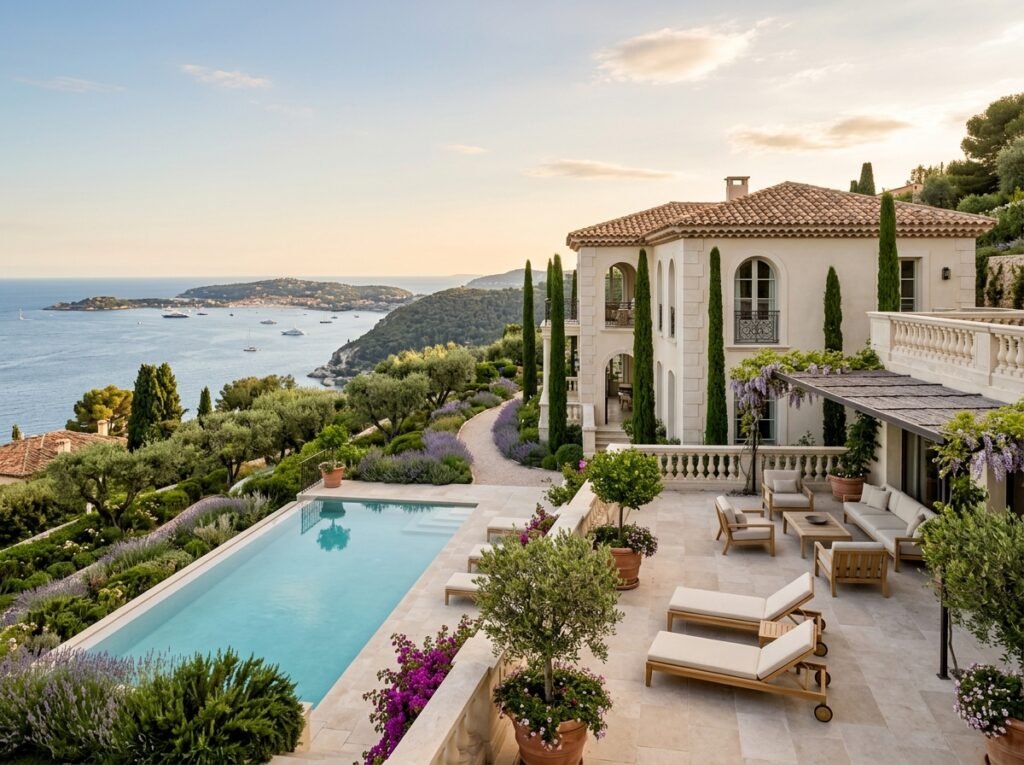
I still remember the first time I walked through a proper French villa viewing in the South of France. From the outside, it looked almost too perfect: limestone walls, lavender along the driveway, olive trees moving gently in the breeze, and a pool facing the hills. But once we started looking closely, the real questions came up fast.
Was the sea view legally protected? Could the guesthouse be rented? Was the pool fully compliant? How much would the roof, shutters, landscaping, security, and local taxes actually cost every year?
That is the reality of buying luxury French villas. The lifestyle is incredible, bro. You are not just buying bedrooms and square meters. You are buying a specific version of life: long lunches under a shaded terrace, summer evenings by the pool, private wine storage, weekend access to Monaco, ski trips from the Alps, or quiet countryside mornings in Provence.
But luxury property in France rewards buyers who move carefully. The best villas are emotional purchases, yet the strongest deals are still made with logic, legal checks, and a clear plan.
This article breaks down what makes luxury French villas worth considering, the best regions to search, the buying process, the ownership costs you should expect, and the practical mistakes that can turn a dream home into an expensive headache.
What Makes Luxury French Villas So Desirable?
Luxury French villas sit in a category of their own because France offers something few countries can match: different premium lifestyles within one market.
You can buy a contemporary sea-view villa near Saint-Tropez, a restored stone mas in Provence, a ski chalet-style estate in the French Alps, a château near Bordeaux, or a sleek private home close to Cannes and Monaco. Every area has its own buyer profile, climate, architecture, and rental potential.
The phrase “luxury French villa” can mean very different things depending on where you are looking.
In the French Riviera, luxury usually means sea views, gated access, landscaped terraces, infinity pools, guest accommodation, private parking, and proximity to beaches, marinas, fine dining, and airports.
In Provence, luxury often means land, privacy, historic stone construction, vineyards, mature olive groves, outdoor kitchens, and interiors that balance traditional architecture with high-end modern comfort.
In the Alps, the value may sit in ski access, mountain views, wellness facilities, fireplaces, spa areas, and the ability to enjoy the property in both winter and summer.
France also has a very established legal property-transfer system, where a notaire plays a central role in the transaction. Acquisition costs are commonly around 7–8% for older homes and around 2–3% for new properties, although the exact amount depends on the deal structure and location.
For international buyers, that structure can feel more formal than buying property in Dubai, the UAE, Qatar, or the United States. But for many buyers, that formal process creates confidence because documentation, ownership history, land registration, and transaction conditions receive serious attention.
Why Buyers Are Choosing Luxury French Villas Instead of Generic High-End Homes
A luxury villa in France can feel more personal than a modern penthouse in a global city.
Yes, a penthouse may offer a concierge, skyline views, and convenience. But a villa gives you more control over the environment around you. You can shape the landscaping, create a wine cellar, build an outdoor entertaining area, renovate the guest wing, improve security, or design a home that works for family holidays across generations.
Luxury French villas also attract buyers who want lifestyle diversity.
One weekend can involve a private lunch overlooking the Mediterranean. Another can be spent visiting vineyards in Provence. A winter break can mean skiing in Courchevel, Megève, or Chamonix. France gives wealthy buyers a powerful mix of climate, culture, food, architecture, and travel connections.
The French Riviera remains especially attractive because it blends Mediterranean living with access to major luxury destinations. Savills highlights ongoing prime residential interest in the Côte d’Azur, where buyers continue to prioritize privacy, views, beach access, and quality second-home locations.
The real advantage is not simply owning a house in France.
It is owning a home that feels irreplaceable.
A modern villa with an infinity pool may be replicated in many countries. A restored Belle Époque residence overlooking Cap d’Antibes, a Provençal estate surrounded by olive trees, or a hillside home with old stone walls and sea views has a different kind of scarcity.
The Best Locations to Buy Luxury French Villas
French Riviera: Cannes, Saint-Tropez, Antibes, Nice, and Cap Ferrat
The French Riviera is the obvious choice for buyers who want glamour, sunshine, international access, and strong lifestyle appeal.
Cannes attracts buyers who enjoy festivals, luxury hotels, designer shopping, beaches, and a lively international scene. Villas in the hills above Cannes can offer privacy and panoramic views while keeping the city within easy reach.
Saint-Tropez remains one of the most recognizable villa markets in Europe. Buyers come for beach clubs, marinas, summer energy, and trophy-home appeal. The strongest villas usually combine privacy, quality landscaping, pool areas, guest accommodation, and quick access to the village or beaches.
Cap d’Antibes is more discreet. It appeals to buyers who want mature gardens, water access, historic villas, and an ultra-prime address without the louder energy of Saint-Tropez.
Nice offers a more year-round city lifestyle. It can work well for buyers who want airport access, restaurants, culture, and a property that is not only used during peak summer months.
Current luxury listings illustrate how widely prices can vary by location, land size, quality, and view. For example, prime villa listings in Provence-Alpes-Côte d’Azur range from around €1 million for smaller homes to several million euros for sea-view and large-land properties.
Provence: Luberon, Aix-en-Provence, Gordes, and Saint-Rémy-de-Provence
Provence is for buyers who want space, charm, and atmosphere.
This is where you find old stone farmhouses, vineyard estates, restored bastides, lavender fields, orchards, and villages with open-air markets. A luxury villa in Provence is less about showing off and more about creating a deeply comfortable base for family life, entertaining, and long summer stays.
Gordes remains a big name because it offers iconic hilltop views, strong architecture, and serious international demand. Saint-Rémy-de-Provence attracts buyers who enjoy art, restaurants, countryside living, and easy access to other parts of southern France.
Aix-en-Provence can suit buyers who want a more connected city environment without sacrificing the Provençal lifestyle. It offers universities, culture, transport links, good restaurants, and a stronger year-round rhythm.
French Alps: Courchevel, Megève, Chamonix, and Val d’Isère
Luxury French villas are not only about the Mediterranean.
The French Alps are perfect for buyers who prioritize mountain lifestyle, skiing, wellness, family holidays, and rental demand during peak winter periods. In many areas, buyers may look at chalets rather than traditional villas, but the purchase logic remains similar: location, access, privacy, views, build quality, and rental potential.
Courchevel is known for ultra-luxury ski property. Megève has a more traditional, elegant village atmosphere. Chamonix attracts active international buyers who enjoy skiing, climbing, hiking, and mountain culture.
The most desirable alpine homes often include:
- Direct or easy ski access
- Heated garages and ski rooms
- Fireplaces and large entertaining spaces
- Spa facilities, saunas, steam rooms, or indoor pools
- Strong insulation and energy-efficient heating
- Views that remain protected from future construction
Bordeaux, Dordogne, and the French Countryside
For buyers who want land, wine-country access, historic architecture, and a slower pace, southwest France can offer excellent value compared with the Riviera.
Bordeaux attracts wine lovers, investors, and buyers who want refined city living with access to vineyards and countryside estates.
Dordogne is popular for historic homes, stone properties, large plots, and a more relaxed lifestyle. Buyers often find more space for the budget here than in Cannes or Saint-Tropez.
The key is understanding that these markets are not interchangeable. A buyer looking for prestige, seasonal rental income, and Mediterranean status may prefer the Riviera. A buyer wanting privacy, land, and long family stays may get more emotional and practical value in Provence or Dordogne.
7 Things to Check Before Buying Luxury French Villas
Before you fall in love with the pool, terrace, or sea view, slow down and inspect the deal properly.
- Confirm the exact ownership boundaries.
A large-looking garden may not always belong fully to the villa. Check land plans, access rights, shared driveways, easements, and boundaries with nearby properties. - Check planning and renovation restrictions.
Historic areas, protected buildings, and certain zones may limit renovations, extensions, exterior color choices, shutters, roofing, pools, and landscaping changes. - Review the condition of roofs, drains, and retaining walls.
South of France villas often sit on slopes. Retaining walls, drainage, terraces, and pool structures can become expensive if they have not been maintained properly. - Verify the pool documentation.
A pool is a major lifestyle feature, but it also requires safety compliance, maintenance, insurance, and technical inspection. Never assume everything was built with the right permissions. - Ask about road access and parking.
Some beautiful village villas have narrow roads, limited parking, and difficult access for construction teams, guests, deliveries, or emergency vehicles. - Understand annual operating costs.
Staffing, gardeners, pool maintenance, air conditioning, heating, security, insurance, repairs, and property taxes can add up quickly. - Investigate rental rules before counting rental income.
Local rental restrictions, registration requirements, zoning rules, and condominium regulations can affect whether you can legally use the villa as a short-term rental asset.
The best buyers do not only inspect the home. They inspect the lifestyle mechanics around the home.
The French Buying Process for International Buyers
Buying luxury French villas is manageable, but you should not treat it casually.
The process often begins with an offer. Once accepted, the parties usually sign a preliminary agreement, often called a compromis de vente. This agreement typically includes conditions that must be satisfied before completion, such as financing approval, title checks, planning information, or other agreed conditions.
The notaire then handles major legal and administrative aspects of the transfer. The notaire is not simply a salesperson or broker. They play a formal legal role in the transaction and handle registration, taxes, and official documentation.
Foreign nationals can generally buy residential property in France, but owning property is not the same as obtaining residency rights. For stays beyond 90 days where applicable, non-EU buyers generally need the appropriate long-stay visa or residence permission.
That distinction matters a lot.
Do not buy a villa assuming it automatically gives you the right to live in France full-time. Build your immigration and residency planning separately with appropriate legal advice.
Your Ideal Luxury Villa Buying Team
A serious purchase should include more than one agent.
You may want:
- A local buyer’s agent or property finder
- A French-speaking lawyer or cross-border tax adviser
- A notaire
- An independent surveyor or building specialist
- A mortgage broker if financing
- A currency specialist if your funds are held outside euros
- An architect or renovation adviser for older villas
- A property-management company for absentee ownership
Bro, this team may sound like extra cost at first. But on a €3 million, €8 million, or €20 million purchase, professional advice can save you from much bigger mistakes.
How Much Do Luxury French Villas Really Cost?
The asking price is only one part of the budget.
A buyer may see a villa listed for €4 million and assume that €4 million is the full acquisition number. In reality, the full investment can include acquisition costs, agency fees, legal advice, inspections, furnishing, upgrades, insurance, taxes, and initial maintenance.
For older properties, French acquisition costs are commonly around 7–8% of the purchase price. New properties may carry lower acquisition costs in the 2–3% range, although VAT and transaction structure can affect the final outcome.
Sample Budget for a €5 Million Villa
Here is a simple example for planning purposes:
| Cost Category | Estimated Range |
|---|---|
| Villa purchase price | €5,000,000 |
| Acquisition costs on an older property | Around €350,000–€400,000 |
| Legal, due diligence, translation, advisers | €20,000–€80,000+ |
| Furnishing and styling | €100,000–€500,000+ |
| Renovation reserve | Depends on condition |
| Annual maintenance and staffing | Depends on size and services |
This does not mean every buyer will spend the same amount. A newly renovated turnkey villa with modern systems may need little work. A historic stone estate with land, guest cottages, and aging infrastructure may need a much larger reserve.
The smartest approach is to create three budgets:
- Purchase budget
- Initial setup budget
- Five-year ownership budget
That third number is where serious buyers separate themselves from emotional buyers.
Taxes and Ownership Costs You Need to Understand
France can be a wonderful place to own property, but tax planning matters.
Property owners may face local property-related taxes, insurance costs, maintenance expenses, utility bills, service charges where applicable, and taxes linked to rental income or future resale gains.
High-net-worth buyers should also understand France’s real estate wealth tax, commonly known as IFI. According to France’s public service information, IFI can apply when the net value of taxable real estate assets exceeds €1.3 million.
That does not mean every foreign buyer will face the same tax result. Your residency status, ownership structure, global assets, debt, family situation, and use of the property can all matter.
This is why you should not rely only on a seller’s agent for tax guidance.
Speak with a qualified French tax adviser and, where relevant, an adviser in your home country. Buyers from the UAE, Qatar, Oman, the United Kingdom, the United States, and other international markets may have different reporting, succession, and tax-planning considerations.
Should You Buy Through Your Personal Name or a Company?
Many luxury buyers ask whether they should purchase directly or through a company structure.
There is no universal answer.
Some buyers use personal ownership because it is simple and clear. Others consider French property-holding structures, family arrangements, or companies for succession planning, shared ownership, privacy, financing, or estate planning.
But do not set up a structure just because someone on the internet said it is “tax efficient.”
A structure that works well for one family can create problems for another. It can affect financing, tax exposure, inheritance planning, future sale flexibility, and administrative duties.
The right approach is simple: decide how you want to use the villa first.
Will it be a holiday home? A primary residence? A rental asset? A family estate? A long-term legacy property? Once you know that, your advisers can help you assess the right ownership structure.
Renovating a Luxury French Villa Without Ruining Its Value
This is where many buyers get it wrong.
They buy a beautiful old villa, then renovate it so aggressively that it loses the charm that made it valuable in the first place.
The strongest renovations respect the architecture while quietly improving comfort.
For example, you can retain original stone walls, wooden beams, shutters, tiled floors, and exterior proportions while upgrading insulation, plumbing, climate control, security, kitchens, bathrooms, lighting, and smart-home systems.
Smart Renovation Priorities
Focus first on the upgrades that improve lifestyle, safety, and resale appeal:
- Roof condition and waterproofing
- Electrical and plumbing systems
- Heating, cooling, and insulation
- Pool equipment and outdoor drainage
- Security systems and gates
- High-quality kitchen and bathroom upgrades
- Landscape lighting and irrigation
- Guest accommodation and staff spaces
- Energy performance improvements
Do not underestimate the importance of energy performance. Older French villas can be romantic, but they can also be expensive to heat and cool. Buyers increasingly care about practical running costs, climate resilience, and technical quality.
A luxury villa should feel timeless, not outdated.
Rental Income: Can Luxury French Villas Produce Returns?
Yes, potentially. But do not buy solely because someone shows you a perfect summer-rental spreadsheet.
The Riviera can generate strong seasonal demand, especially for villas close to beaches, marinas, Cannes, Saint-Tropez, Antibes, and Monaco. But rental income depends on location, design, marketing, management, legal compliance, seasonality, guest expectations, and competition.
A villa with poor access, dated interiors, no air conditioning, limited parking, or weak outdoor spaces may not perform as well as a smaller but better-designed property.
The strongest rental villas usually offer:
- Private pool
- Air conditioning
- Modern bathrooms
- Strong Wi-Fi
- Multiple en-suite bedrooms
- Good outdoor dining space
- Secure parking
- Easy access to local attractions
- Professional photography and management
- Reliable housekeeping and guest support
Treat rental income as an upside, not a guarantee.
If the property works financially only when it is rented every high-season week, the deal may be too tight.
How Luxury French Villas Compare With Other High-End Property Markets
Luxury French villas compete with prime property in Dubai, London, Ibiza, Tuscany, Miami, Monaco, and the Greek Islands.
Dubai may offer newer buildings, faster transactions, and a different tax environment. Monaco offers status, security, and scarcity, but often at an extremely high price per square meter. Tuscany can deliver similar countryside charm, while Ibiza offers stronger party-season energy.
France stands out because it offers a deeper blend of architecture, lifestyle, culture, infrastructure, food, travel, and regional variety.
You can buy something bold and modern on the Riviera. You can buy something quiet and historic in Provence. You can buy an alpine retreat that works in every season.
That variety makes France more than a single luxury market.
It is a portfolio of luxury lifestyles.
Final Thoughts
Buying luxury French villas can be one of the most rewarding property decisions you ever make, but only when you buy with both emotion and discipline.
The right villa should give you more than a beautiful photo for social media. It should work for your family, travel habits, ownership structure, maintenance budget, privacy needs, and long-term plans.
Start with the lifestyle you want. Then choose the location. After that, build the right advisory team, inspect the property deeply, understand the full cost of ownership, and negotiate from a position of knowledge.
The best villa is not always the biggest one.
It is the one that gives you the strongest mix of location, character, usability, and long-term value.
Ready to explore the broader world of premium real estate? Read our next article on high end property to discover what separates a genuinely elite investment from an expensive property with a luxury label.